
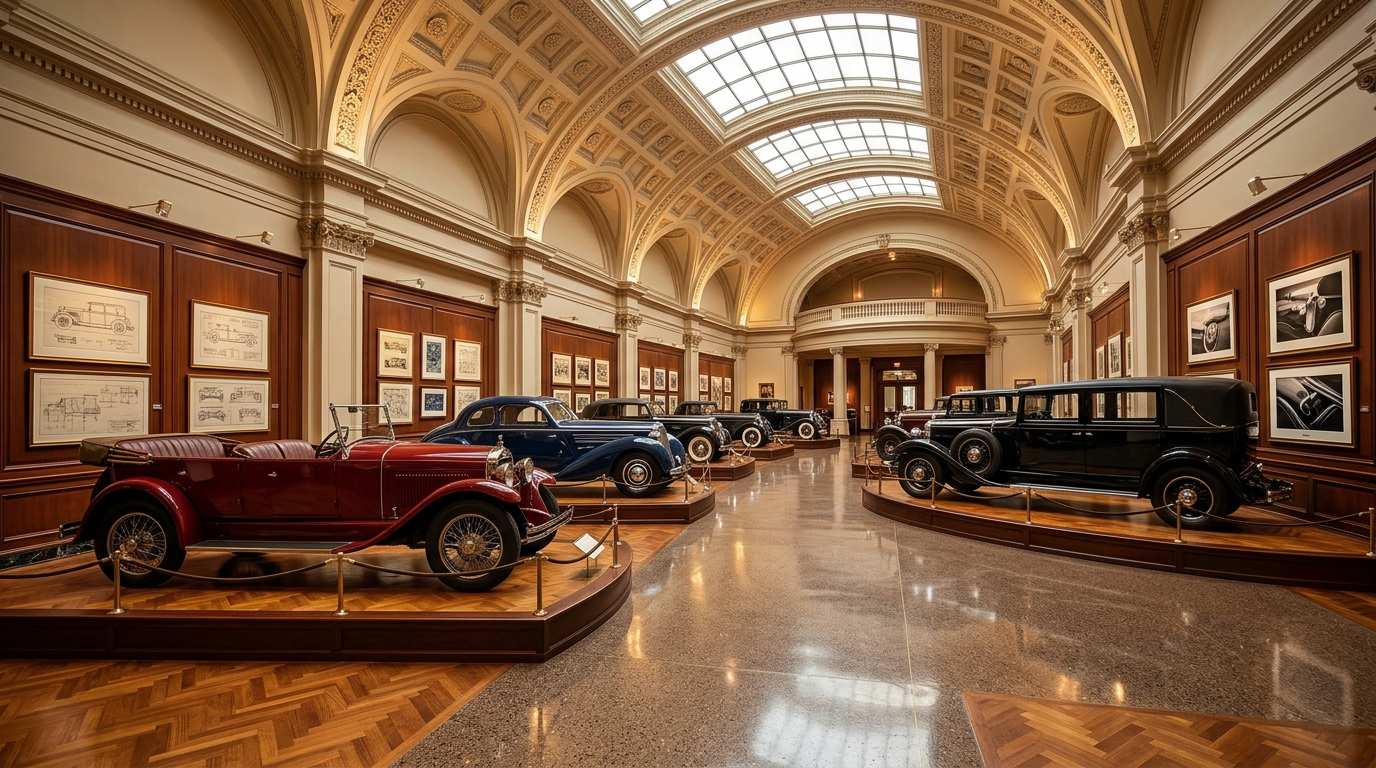
The context: strategic digital transformation for a historic automotive collection
The museum houses the world's oldest private collection of historic motorcars, bespoke coachwork, and fine automotive art. To make its remarkable heritage, rotating special exhibitions, and extensive archives accessible to a global audience of car enthusiasts, historians, and vacationers, the institution resolved to eliminate its dependence on external web agencies and transition to an integrated Content Management System (CMS).
Robbert Hock was engaged via agency Fortius as Sitecore Solutions Architect and Technical Consultant to author the strategic vision and technical architectural blueprints for the museum's digital evolution.
The engagement encompassed comprehensive analysis of multi-stakeholder content workflows, authoring a phased migration strategy to Sitecore CMS, and designing innovative cross-media applications bridging physical showroom galleries with mobile digital channels.
Technical challenges and architectural solutions
1. Unified management of enterprise content and collection archives
Consolidating diverse information streams — including physical vehicle archives, fine art inventories, press releases, newsletters, opening hours, and ticketed events — into a single manageable platform was the core objective:
- Flexible collection modeling: Modeled a modular Sitecore data architecture unifying collection artifacts, technical chassis specifications, historical essays, and multilingual translations into a cohesive item tree.
- Editorial self-sufficiency: Designed streamlined publishing workflows empowering the internal museum curatorial team to update exhibits, gallery locations, and announcements autonomously without developer intervention.
- Structured heritage archiving: Defined reusable metadata schemas guaranteeing that provenance records, high-resolution photography, and restoration histories were preserved systematically.
2. Device-independent presentation and mobile on-floor museum engagement
Inspiring visitors to engage digitally before, during, and after their museum visit across diverse mobile devices and touchscreens:
- Responsive presentation framework: Architected a modern, multilingual presentation layer adapting gracefully across mobile phones, tablets, and large displays.
- On-premise gallery interaction: Designed a cross-media concept linking physical museum exhibits to mobile contextual storytelling via QR codes on display stanchions. Visitors scan a vehicle badge to view archival race footage, engine audio recordings, and historical photography directly on their personal mobile devices.
- Multilingual internationalization: Established localization standards ensuring international tourists navigate exhibitions in their native language seamlessly.
3. Advanced collection filtering, social engagement, and analytics
Transforming an expansive historical archive into an intuitive, discoverable research experience while deepening visitor engagement:
- Faceted search and taxonomy design: Designed faceted filtering and tagging structures within the CMS to dynamically interconnect vehicles, artwork, and historical milestones by era, body style, coachbuilder, and country of origin.
- Personalized visitor dialogs: Formulated integration blueprints for e-mail marketing, social authentication, and web analytics to engage prospective visitors with tailored visit planning and post-visit invitations to lectures.
- Ticketing conversion optimization: Streamlined visitor planning itineraries, transparent admission structures, and interactive directions to maximize digital ticket inquiries.
Outcomes and sustained business impact
The architectural roadmap formulated by Robbert Hock provided executive leadership with an actionable, strategic path from a static web presence to a modern Digital Experience Platform:
- Actionable digital roadmap: Delivered a comprehensive strategic blueprint and phased technical architecture empowering executive decision-making.
- Blueprint for curatorial autonomy: Established the data foundation for internal staff to curate, update, and manage the world-class automotive collection autonomously.
- Enhanced physical gallery experience: Pioneered an on-premise mobile concept enriching visitor interaction with historic artifacts without cluttering physical display halls.
- Scalable cultural heritage foundation: Built a resilient, future-ready architecture positioned for international reach, ticketing systems integration, and faceted archive discovery.